Deer Hunting on Conservation Land Bank Preserves 

Both nationally and regionally, researchers have found that elevated deer populations are interfering with tree and shrub reproduction and reducing the abundance of, or eliminating, prairie and woodland wildflowers. Heavy browsing can also lead to dominance by unpalatable or browse-tolerant plant species, including introduced invasive species. By reducing available food resources and altering habitats, these changes can have cascading effects on a wide range of insects, amphibians, reptiles, small mammals, and birds. Locally, deer herbivory of island marble host plants and eggs/larvae is a major mortality factor impeding recovery of this butterfly and negatively impacting other Species of Greatest Conservation Need.   

In the absence of natural predator populations, hunting is an important wildlife population management mechanism that helps maintain population levels for the benefit of the hunted species as well as other sensitive species and habitats. It also provides valuable data used to monitor game population health. For many, hunting also provides local, ethically sourced food.  

Over the years, Washington Department of Fish and Wildlife (WDFW) biologists have held several public meetings in San Juan County and have advocated strongly for management of the deer population. Many islanders recall the 2021 adenovirus hemorrhagic disease (AHD) outbreak spread quickly through the islands’ high populations. Although this provided a temporary break from over-browsing and likely resulted in increased flowering on some Land Bank Preserves, harvest data suggests deer populations are recovering quickly, especially on Orcas, San Juan and Lopez islands (WDFW, August 2024). 

For additional information see the Washington Department of Fish and Wildlife’s overview of  Hunting in the San Juan Islands.

San Juan County does not allow the use of modern rifles and requires written permission of the landowner for the discharge of firearms. The only weapons allowed for hunting in the County are a specialized class of short-range pistols, shotguns, archery equipment, and muzzleloader rifles.  

Except in the case of hunting by treaty tribes, hunting seasons and regulations are determined by WDFW. Deer hunting seasons generally occur from September 1st until December 31st. Male and/or female deer may be harvested depending on the season.

Native people have always relied on the natural resources of this land. Their personal, cultural and spiritual survival depended on the ability to fish, hunt and gather natural resources. Along with predators such as wolves and mountain lions, hunting by Indigenous people likely played a significant role in regulating the abundance of deer. Displacement by European settlers upset this balance. Today, the 20 treaty Indian tribes in western Washington continue to exercise their treaty rights in their usual and accustomed fishing areas. For many tribes, this includes what is now San Juan County. The county government, including the Land Bank, is making efforts to improve relations with local tribes in many ways. This proposal to allow limited hunting on some public natural areas is a part of these efforts.   

To learn more about tribal treaty rights visit the following links: 

About Us – Northwest Treaty Tribes 

Treaty Hunting Rights FAQ | Northwest Indian Fisheries Commission 

WA Tribal Treaty Rights – Center for Environmental Law & Policy 

Tribal hunting | Washington Department of Fish & Wildlife 

Treaty history with the Northwest Tribes | Washington Department of Fish & Wildlife  

Few public lands allow hunting in the San Juan Islands. Currently deer hunting opportunities exist on two Conservation Land Bank Preserves, one on San Juan Island and one on Lopez Island. There is currently no hunting on Orcas Land Bank Preserves, but hunting is allowed at the 151-acre Washington Department of Fish and Wildlife owned Killebrew Lake Wildlife Area Unit.   

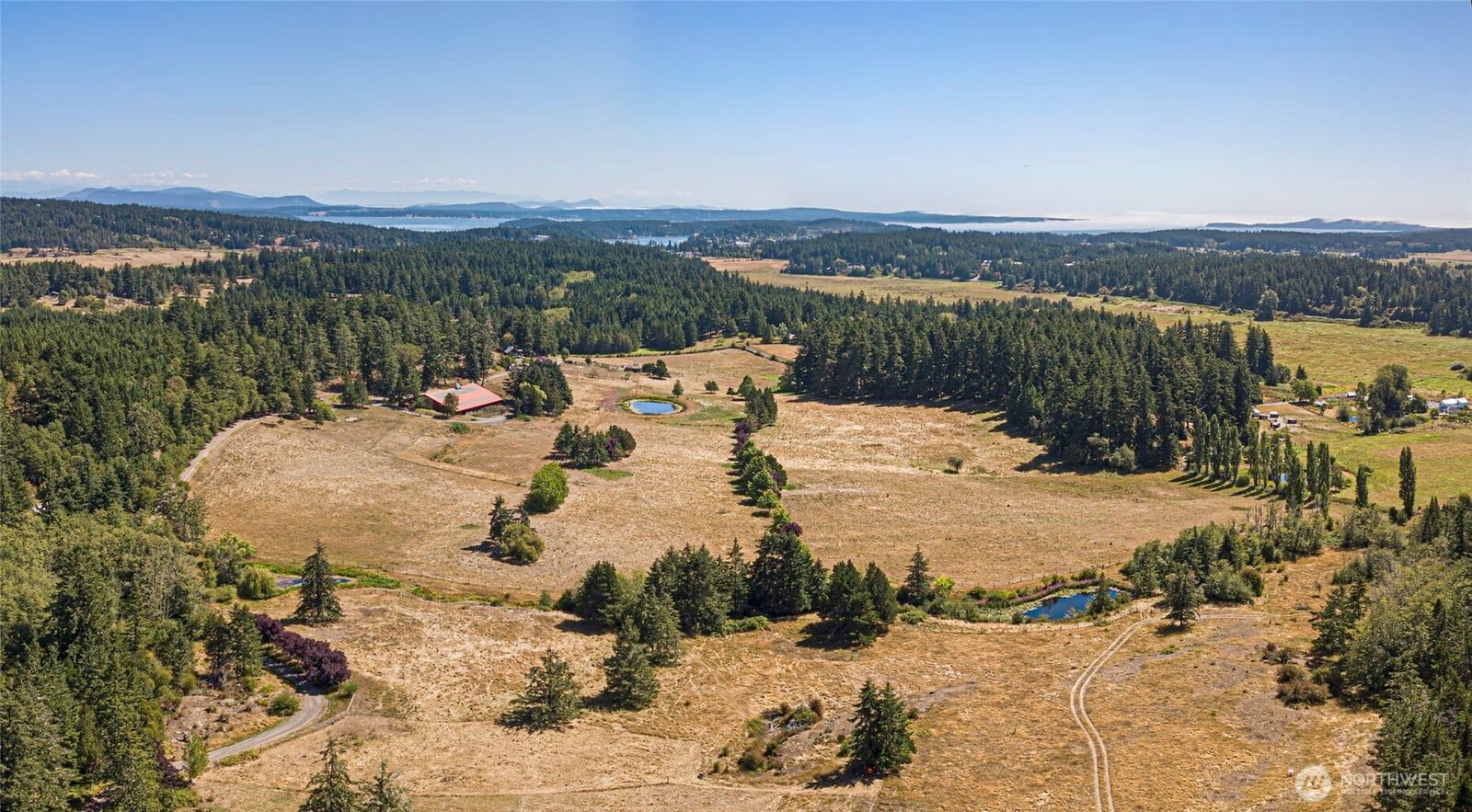
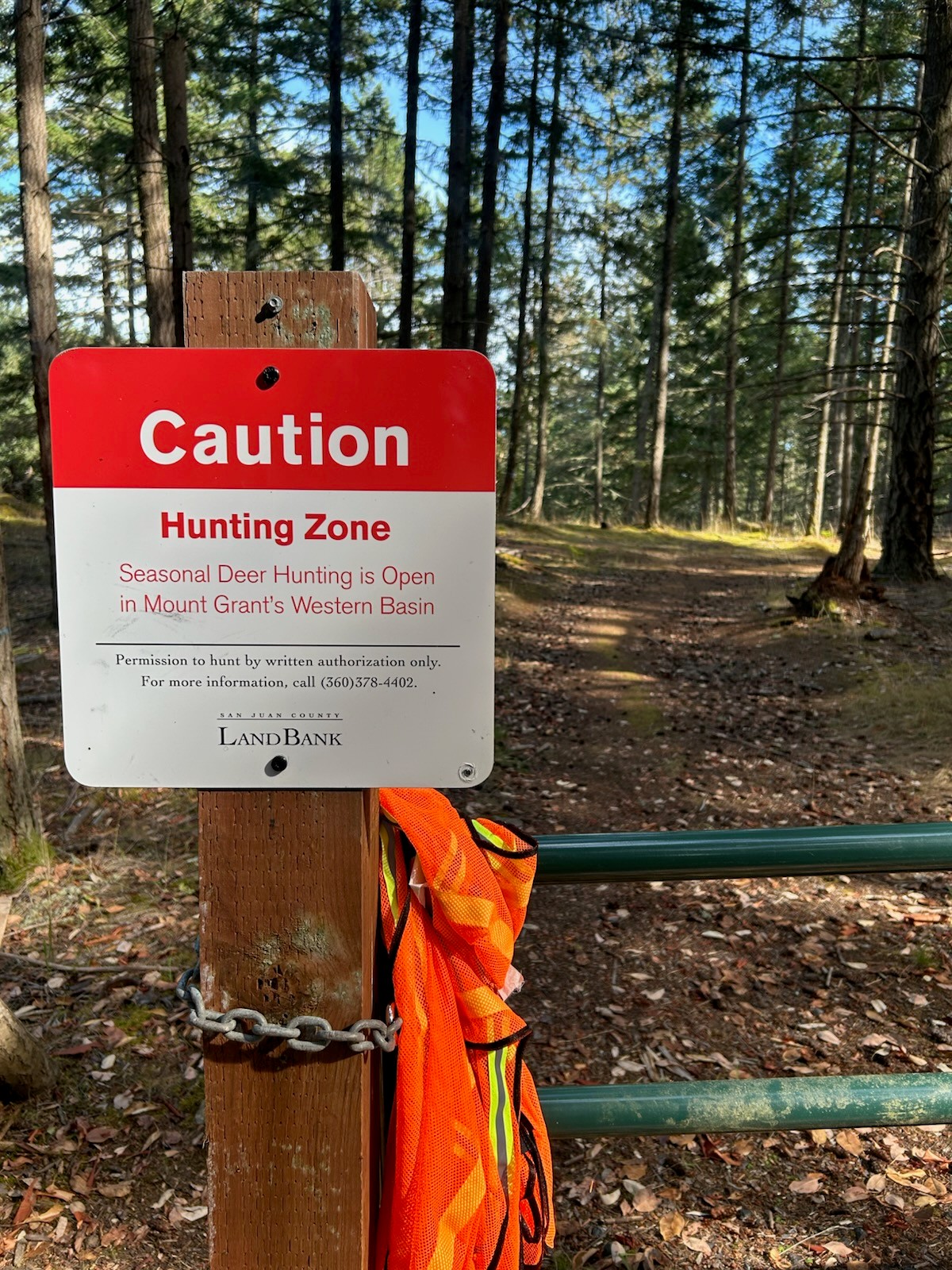
On San Juan Island’s Mount Grant Preserve, hunting has been allowed since 2020 within a designated area located at the western side of the preserve. In 2023, the San Juan Preservation Trust began allowing hunters to access their adjacent Sugarloaf Preserve as an extension of the Mount Grant hunting area. Hunting at this site is reservation only and managed through WDFW’s Hunting Access Program. Hunters make reservations online and the site is restricted to one party, per day, with limits on both the number of hunters and the number of vehicles. Hunters use a separate driving access from trail users. Signs are posted at the entrance to the hunting zone along with orange-reflective vests for trail users. A map of the hunting area and a sign-in sheet are located at the parking area. Hunting boundaries are marked with blue/white flagging and set back 100 feet from neighboring private properties.  

On Lopez Island, hunting is allowed on the entirety of Lopez Hill Preserve. Hunting was allowed when the property was owned and managed by Washington DNR. When the Land Bank entered into a lease agreement in 2009, hunting continued but the season was shortened to September-October. The Land Bank has encouraged hunters to use the northeast corner of the Preserve where there are no trails.?In 2020, the Land Bank initiated a permission system based on the one used at Mt Grant on San Juan Island. The Land Bank issues permission letters to applicants and in 2025, the Land Bank responded to sixty-four inquiries. Orange vests are also placed at trail head entry points at Lopez Hill, and signs with hunting season dates are posted. 

In collaboration with the WDFW and representatives of the area’s treaty tribes, the Land Bank will host a public meeting on March 23, 2026, to share a proposal to allow limited opportunities to hunt deer on two Orcas Island preserves, Turtleback Mountain and North Shore. The current hunting proposal includes opening a select area of Turtleback Mountain to state hunters during the early-modern season and offering roughly a two-week period on either preserve for tribal hunting.  

The potential Turtleback hunting zones are within the Reserve Areas and were selected for their relative isolation from trails and neighbors (see map). Additional buffers would be applied to trails and property boundaries. If approved, Phase 1 would begin in late 2026 and Phase 2 would begin in 2027. The potential North Shore hunting zone would include the entire preserve minus the beach and a buffer along the preserve boundaries (see map). At both preserves, there would also be restrictions on the types of arms and ammunition allowed. The Land Bank would mark hunting areas, provide orange vests, and post temporary signage at both preserves.  At the March 23rd meeting, managers will share details about this proposal and be available to answer questions. 

Unlike Turtleback Mountain, North Shore Preserve would be closed to the public for approximately two weeks during tribal hunting. In the words of Valentino Villaluz, wildlife program manager for the Swinomish Indian Tribal Community, “Partnerships like this not only honor our commitment to co-management and conservation but also provide an opportunity to reconnect with a landscape our people have stewarded for thousands of years.” The Northwest Indian Fisheries Commission (NWIFC) Wildlife Program Manager will coordinate the tribal hunt reservation process.  A spreadsheet containing hunt party reserved dates, hunter contact information and a point of contact with their respective tribe will be shared with the San Juan County Land Bank. 

A recording of this meeting and a summary of public comments will be shared with all interested parties and made available here. Following the meeting, Land Bank Commissioners will review public comments, and make a recommendation on whether and how to proceed with the proposal.